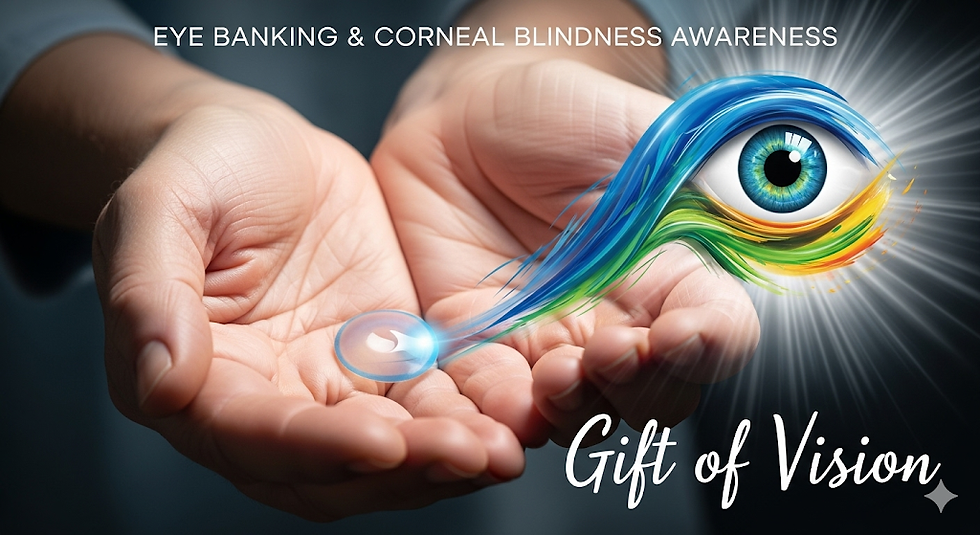
Eye Banking & Corneal Blindness Awareness: Gift of Vision
- Neo HealthCare
- Sep 12
- 3 min read

Corneal blindness is one of the most pressing yet preventable causes of vision loss in India. According to studies, millions of people across the country suffer from corneal opacity, infections, or trauma, leading to partial or complete blindness. Unlike other forms of blindness, however, corneal blindness can be treated effectively through corneal transplantation. The only challenge is the availability of donor corneas. This is where eye banking and awareness about eye donation play a critical role.
In this blog, we explore the importance of eye banking, the growing need for corneal donation, and how advanced medical facilities such as Neo Hospital, a trusted Eye Hospital in Noida, are contributing to restoring vision and transforming lives.
Understanding Corneal Blindness
The cornea is the transparent, dome-shaped layer at the front of the eye that allows light to enter and focus on the retina. It acts like a window for clear vision. When the cornea becomes damaged due to injury, infections such as keratitis, or genetic disorders like keratoconus, vision becomes blurred or completely lost.
Unlike damage to the retina or optic nerve, corneal blindness can be reversed in most cases through a surgical procedure called corneal transplantation. In this surgery, the damaged cornea is replaced with a healthy cornea from a donor. This simple but life-changing procedure restores sight and improves quality of life.
What Is Eye Banking?
Eye banks are specialized institutions that collect, store, and distribute donated corneal tissues for transplantation. Their role is much larger than just preserving tissues – they are the backbone of corneal transplant programs across the world.
The functions of an eye bank include:
Collecting donor eyes after a person’s death.
Preserving and ensuring the quality of corneas for surgery.
Training ophthalmologists and healthcare professionals.
Conducting public awareness campaigns to encourage eye donation.
With proper eye banking systems in place, every eye donation has the potential to give vision to two individuals, since one person’s two corneas can be transplanted into two recipients.
Why Eye Donation Awareness Matters
Despite the growing number of patients waiting for corneal transplants, the availability of donated eyes remains low in India. The shortage largely comes from lack of awareness and myths surrounding eye donation. Some families hesitate due to misconceptions that eye donation disfigures the body or is against cultural or religious values. In reality, most faiths endorse donation as an act of kindness, and the process is carried out with dignity and respect.
Key facts to remember:
Anyone can pledge to donate their eyes, regardless of age, gender, or medical history.
Eye donation does not interfere with funeral practices.
The process must be carried out within 4–6 hours after death by trained professionals.
By spreading awareness and pledging to donate, we can close the gap between demand and supply and help restore sight to countless individuals.
Role of Hospitals and Ophthalmologists
While awareness is the first step, access to quality treatment is equally essential. Patients with corneal blindness need timely consultation, proper diagnosis, and surgical expertise. This is where advanced facilities like Neo Hospital, a well-recognized Eye Hospital in Noida, make a difference.
An experienced Ophthalmologist in Noida can provide:
Early diagnosis of corneal diseases.
Surgical solutions such as keratoplasty (corneal transplant).
Modern cataract and refractive surgeries.
Comprehensive follow-up care to ensure long-term success.
By combining advanced technology with skilled doctors, hospitals like Neo Hospital are not only treating patients but also driving awareness campaigns about eye banking and organ donation.
How You Can Contribute to the Cause
Awareness about eye banking and corneal blindness is not just for doctors and hospitals – it is a responsibility we all share. Here are simple ways you can contribute:
Pledge your eyes – Sign up as an eye donor and inform your family about your wish.
Spread the message – Talk about the importance of eye donation during social gatherings, in schools, and through social media.
Support eye banks – Volunteer or donate to organizations that are actively working in eye banking and transplant programs.
Encourage routine eye check-ups – Regular visits to an ophthalmologist in Noida or your local eye hospital can help detect corneal issues early and prevent vision loss.
Conclusion: A Gift of Vision
The journey to reducing corneal blindness begins with awareness and collective action. Eye banking and corneal donation are powerful tools that can bring light into the lives of millions. Every donated eye is a gift of vision, an act of compassion that goes beyond life.
If you or a loved one are experiencing vision problems, don’t delay. Visit an experienced Ophthalmologist in Noida at Neo Hospital, a trusted Eye Hospital in Noida, to receive expert care and explore advanced treatment options. Together, through awareness, donation, and medical expertise, we can ensure that corneal blindness does not remain a lifelong disability but becomes a condition with hope and healing.


Comments