Probiotics vs Prebiotics: What’s Better for Your Gut?
- Neo HealthCare
- Sep 4
- 3 min read

In recent years, the importance of gut health has moved from the background to the center of health discussions. Our digestive system isn’t just about breaking down food — it plays a key role in immunity, mood regulation, and overall well-being. Two terms often heard in this context are probiotics and prebiotics. While they sound similar, their functions are different yet complementary. Many people wonder: Which is better for gut health — probiotics or prebiotics?
In this blog, we’ll break down the difference between the two, their benefits, food sources, and when to see a specialist like the Best Gastroenterologist in Noida at Neo Hospital Sector 50 for professional guidance.
What Are Probiotics?
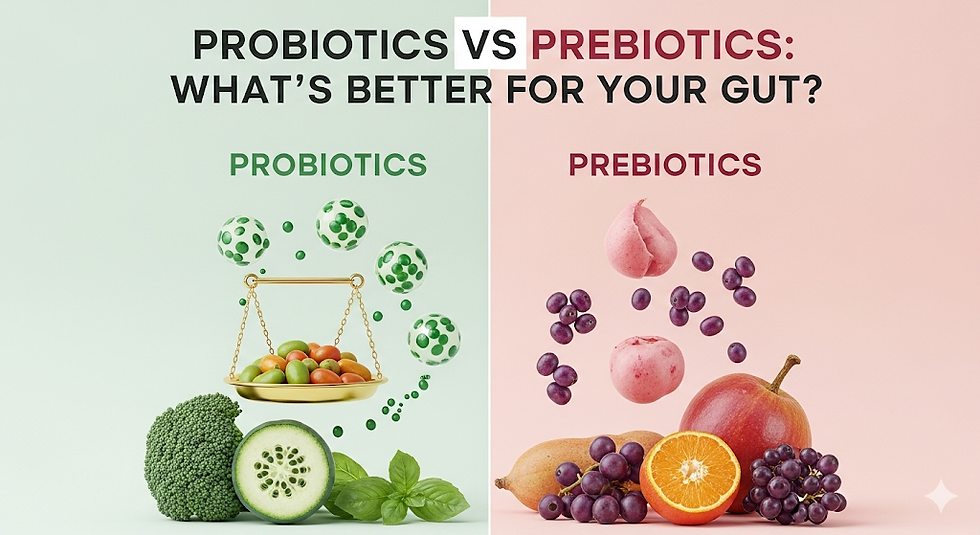
Probiotics are live microorganisms, mainly “good bacteria” and yeasts, that help restore and maintain a healthy balance in your gut. Think of them as reinforcements — they add beneficial bacteria to your system, helping counteract harmful microbes that may cause illness.
Benefits of Probiotics:
Improve Digestion: Help break down food and absorb nutrients efficiently.
Boost Immunity: Strengthen the gut barrier and protect against infections.
Reduce Digestive Issues: Useful for people with IBS, diarrhea, or constipation.
Support Mental Health: Emerging research shows probiotics may reduce stress and anxiety by influencing the gut-brain axis.
Aid in Recovery After Antibiotics: Replenish healthy bacteria that antibiotics may wipe out.
Food Sources of Probiotics:
Yogurt with live cultures
Kefir
Sauerkraut
Kimchi
Tempeh
Miso soup
What Are Prebiotics?
Prebiotics are not bacteria themselves but rather the food for probiotics. They are non-digestible fibers found in certain foods that help nourish and grow beneficial bacteria already present in your gut.
Benefits of Prebiotics:
Fuel for Probiotics: Help good bacteria thrive and multiply.
Improve Calcium Absorption: Important for bone health.
Reduce Inflammation: Linked to lower risk of chronic diseases.
Regulate Blood Sugar: May improve metabolic health.
Support Long-Term Gut Health: Build a strong foundation for digestive balance.
Food Sources of Prebiotics:
Bananas (especially slightly unripe)
Garlic
Onions
Leeks
Asparagus
Whole grains like oats and barley
Apples
Probiotics vs Prebiotics: The Key Differences
While both contribute to gut health, their roles are different:
Feature | Probiotics | Prebiotics |
Definition | Live “good” bacteria & yeasts | Non-digestible fibers feeding good bacteria |
Role in Gut | Add beneficial bacteria to your system | Nourish and promote growth of good bacteria |
Found In | Fermented foods & supplements | Fiber-rich fruits, vegetables, and grains |
Immediate Benefit | Can restore balance after antibiotics or illness | Strengthen gut microbiome over time |
Together, probiotics and prebiotics work best. Probiotics introduce healthy bacteria, and prebiotics ensure they flourish.
Which Is Better for Your Gut?
The answer isn’t about choosing one over the other. Instead, it’s about including both in your diet.
If your gut microbiome is depleted (e.g., after antibiotic use), probiotics may provide immediate relief.
For long-term gut health, prebiotics are essential as they create a stable environment where probiotics can thrive.
Ideally, a synbiotic approach — combining both probiotics and prebiotics — offers maximum benefits. For example, eating yogurt (probiotic) with oats or bananas (prebiotic) is a simple synbiotic meal.
When Should You See a Gastroenterologist?
While most people can maintain gut health with balanced nutrition, some symptoms may indicate deeper issues:
Frequent bloating, gas, or abdominal pain
Chronic constipation or diarrhea
Blood in stool
Severe acidity or reflux
Unexplained weight loss
Persistent fatigue (linked to poor nutrient absorption)
If you face any of these, consulting a specialist is the safest step. The Best Gastroenterologist in Noida at Neo Hospital Sector 50 can help diagnose whether you need lifestyle changes, specific supplements, or further medical intervention.
Practical Tips for Better Gut Health
Eat a Balanced Diet: Include both probiotic-rich and prebiotic-rich foods.
Limit Processed Foods: Sugar and unhealthy fats disrupt gut bacteria.
Stay Hydrated: Water supports digestion and fiber activity.
Exercise Regularly: Physical activity positively impacts gut flora.
Get Enough Sleep: Poor sleep affects digestion and immunity.
Use Supplements Wisely: Only under medical advice, especially if you have chronic gut issues.
Conclusion
The debate between probiotics vs prebiotics is not about one being superior but about how they complement each other. Together, they form a powerful duo that supports digestion, immunity, and overall well-being. Incorporating both into your daily routine through food — and seeking medical guidance when needed — is the key to long-term gut health.
If you experience persistent digestive problems, don’t rely solely on diet or over-the-counter remedies. Reach out to a trusted expert like the Best Gastroenterologist in Noida at Neo Hospital Sector 50 for professional care tailored to your needs.
Your gut health is central to your overall health — nourish it, and it will take care of you.


Comments